
Agriculture plays a dominant role in the Indian economy. Nearly 70% of the population lives off it. It is the main source of food for the Indian people. Much of the raw material is provided for the industries by the agriculturists. Agriculture also fetches a lot of foreign exchange. The farmers follow different types of farming to get the best results.
8 Different Types of Agriculture & Farming in India
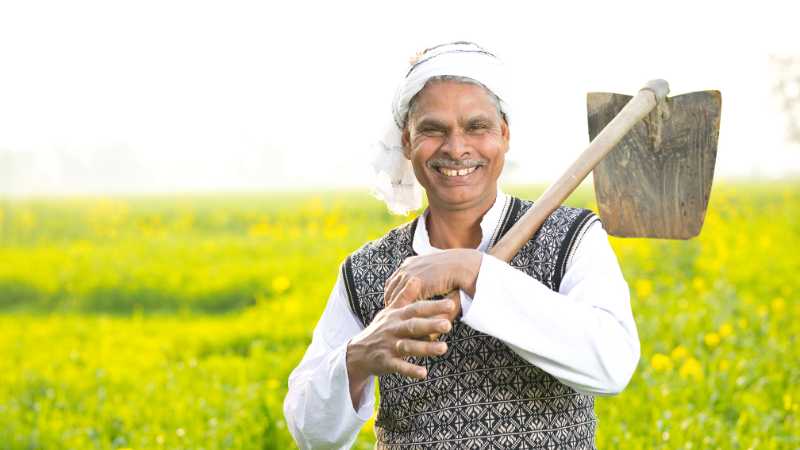
1. Shifting Cultivation
Here, the farmer clears a single piece of land by felling trees or adopting a slash-and-burn approach. Then, the seeds are directly planted without any ploughing. Root crops such as tapioca and yam, which can be preserved longer, are grown. The nomadic and tribal people in India’s northeastern states practice this agriculture. After about 2 to 3 years, the soil loses fertility and is abandoned. This forces the farmers to move elsewhere. This method is ecologically impactful, leading to deforestation and soil erosion, but remains a traditional practice in many regions.
2. Subsistence Farming
The primary objective is that the farmer consumes the produce. The family members of the farmer manage the farm. Most work is done manually, and farmers follow traditional farming methods. The size of the farms is small. Subsistence farming is prevalent in areas with high population pressure on land and is characterized by low levels of technology and household labour usage.
3. Plantation Agriculture
This is done in huge estates. A single crop is grown. It requires plenty of investment as well as labour. It takes some years for the crop to yield. The farmers use scientific methods of farming. The yield is sold in the market, and some is exported. Common crops include tea, coffee, rubber, and sugarcane, and this type of agriculture often involves large-scale production for international markets.
4. Mixed Farming
Here, the farmer uses some part of his land for other activities such as poultry, rearing cattle, dairy farming, fishing, etc. The farmer gets additional income from these activities. The farmers face fewer risks with this kind of farming. This approach provides a more sustainable and diversified income source and helps maintain utility and reduce dereduce on a single crop.
5. Intensive Farming
In intensive farming, a small area of land is cultivated. There are high inputs of labour and fertilizers in this type of farming to achieve maximum yield. This farming is common in densely populated areas of India. Rice cultivation in West Bengal and Tamil Nadu is an example of intensive agriculture.
6. Dry Farming
Dry farming is generally carried out in arid regions of India. Dry farming involves agriculture without the use of irrigation or little irrigation. Farmers primarily rely on soil moisture for crop cultivation. Dry farming is common in parts of Rajasthan, Gujarat, and a few areas of Maharashtra. In this type of farming, crops like bajra and jowar are grown.
7. Terrace Farming
Terrace farming is done in hilly areas. Here, the land is shaped into multiple flat areas that resemble steps. This method prevents soil erosion and water runoff. In India, it is practised in the Himalayan states. Crops like rice and wheat and fruits like apples and oranges are cultivated.
8. Organic Farming
In organic farming, synthetic fertilizers, pesticides, and growth regulators are not used. Organic wastes and biofertilizers are used in organic agriculture. Sikkim is the front-runner in this and is getting close to becoming fully organic, promoting sustainable agricultural practices.
Agriculture is an integral part of our economy. It has to be nurtured well. Of course, it still depends upon seasonal rains and crops often fail to yield as a result. Efforts are being made to streamline agricultural practices for better yields.

2 Comments
very good for a report!!!
really agreed by u………………….